Friday, July 23, 2010

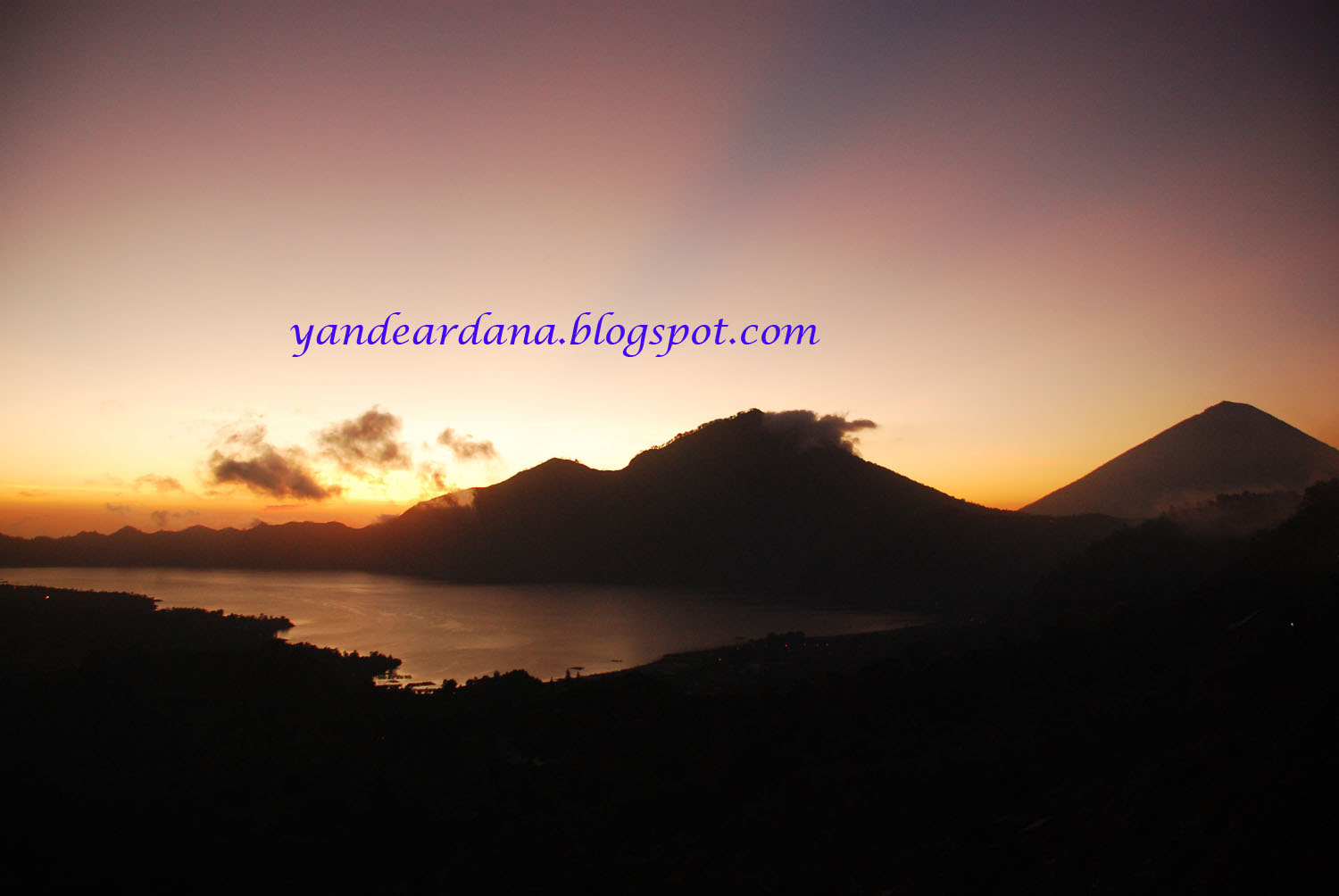
Sunrise From Kintamani


Kintamani is a village to overlook to huge caldera where Batur volcano and Batur lake exist, usually people go there on lunch time to enjoy the scenery but it worth visiting also during the morning on sunrise time, take some pictures while enjoying cups of Bali coffee from the "warung"

Thursday, March 11, 2010

Yogyakarta

YOGYAKARTA or JOGJA is the main tour destination of the island of Java in Indonesia.

Yogyakarta (some people call it Jogja, Jogjakarta, or Yogya) is a city with outstanding historical and cultural heritage. Yogyakarta was the centre of the Mataram Dynasty (1575-1640), and until now the kraton (the sultan's palace) exists in its real functions. Also, Yogyakarta has numerous thousand-year-old temples as inheritances of the great ancient kingdoms, such as Borobudur temple established in the ninth century by the dynasty of Syailendra.
More than the cultural heritages, Yogyakarta has beautiful natural panorama. The green rice fields cover the suburban areas with a background of the Merapi Mountain. The natural beaches can be easily found to the south of Yogyakarta.

Here the society lives in peace and has typical Javanese hospitality. Just try to go around the city by bike, pedicab, or horse cart; and you will find sincere smiles and warm greeting in every corner of the city.


An artistic atmosphere is deeply felt in Yogyakarta. Malioboro, as the center of Yogyakarta, is overwhelmed by handicraft from all around the city. Street musicians always ready entertain the visitors of the lesehan food stalls.

Those who have visited Yogyakarta reveal that this city makes them long for it. Just visit here, then you will understand what this means.


Transportations to Yogyakarta:

Train
You may reach Yogyakarta by train from Jakarta, Bandung, or Surabaya
Bus
Yogyakarta is reachable by bus from Sumatra Island, Bali Island, and most cities of Java Island.
Plane
Recently, international direct flights from Kuala Lumpur are established to Yogyakarta. In addition, domestic flights to Yogyakarta from Jakarta, Denpasar, Balikpapan, and many others, are available now.

Sunday, March 7, 2010

Borobudur


Borobudur is a ninth-century Mahayana Buddhist monument in Magelang, Central Java, Indonesia. The monument comprises six square platforms topped by three circular platforms, and is decorated with 2,672 relief  panels and 504 Buddha statues.  A main dome, located at the center of the top platform, is surrounded by 72 Buddha statues seated inside perforated stupa.


The monument is both a shrine to the Lord Buddha and a place for Buddhist pilgrimage. The journey for pilgrims begins at the base of the monument and follows a path circumambulating the monument while ascending to the top through the three levels of Buddhist cosmology, namely Kāmadhātu (the world of desire), Rupadhatu (the world of forms) and Arupadhatu (the world of formlessness). During the journey the monument guides the pilgrims through a system of stairways and corridors with 1,460 narrative relief panels on the wall and the balustrades.


Evidence suggests Borobudur was abandoned following the fourteenth century decline of Buddhist and Hindu kingdoms in Java, and the Javanese conversion to Islam. Worldwide knowledge of its existence was sparked in 1814 by Sir Thomas Stamford Raffles, the then British ruler of Java, who was advised of its location by native Indonesians. Borobudur has since been preserved through several restorations. The largest restoration project was undertaken between 1975 and 1982 by the Indonesian government and UNESCO, following which the monument was listed as a UNESCO World Heritage Site. Borobudur is still used for pilgrimage; once a year Buddhists in Indonesia celebrate Vesak at the monument, and Borobudur is Indonesia's single most visited tourist attraction.

Saturday, February 27, 2010

Grebeg Sekaten


Peak Sekaten this year so special. Keraton Ngayogyakarta Hadiningrat prepared a special seven mountains to enliven Grebeg Dal sekaten year which falls on Friday, February 26, 2010 yesterday. "Usually only five mountains on each Grebeg sekaten, two Mount Question Gunungan Princess, Mount Mount Gepak and Pawuhan, but because this year is a year-Dal, the amount of the special mountain seven mountains," the statement Penghageng Kawedanan Ngayogyakarta Hageng Panitrapura Sultanate Palace GBPH Joyohadikusumo.
Dal Year is celebrated once every 8 years. Two additional mountains to be issued in the palace of Dal sekaten years later is Dharat Mount, and the most special is the Mount Brama / Kutug. Brama mound should not be contested by members of the community, and must be returned in full to the state court, after being paraded and pray in the mosque Gedhe, in Kauman, City of Yogyakarta. Mound Brama diperbutkan own will by the Emperor, Empress, and her family.
Kakung mound will be brought back to Pura Pakualaman.
Joint security forces guarding the Army, Navy, Police since 7 o'clock in the morning had seemed ready to start from the palace to the mosque Gedhe.


Apparently they do not want anymore missed like last year, the mountains had been captured by thousands of people crowded the mosque yard Gedhe.
Year 2010, the mosque door was closed starting at 8 AM.
Mount Brama addition, other features on Grebeg sekaten year celebration is the procession Dal make rice "lump" which is Sri Sultan Hamengkubuwono (HB) X. Rice is taken from a container called Kanjeng Mrico Nyai, then distributed to anyone present at the event.


Sekaten is cultural and religious events are very important. Mound became a symbol of charity to the people of Sultan made from agricultural products (the symbol of public welfare).


Public enthusiasm for this sekaten Grebeg event is not only limited to the Yogyakarta region, but has spread to the corners of Java. Even Fathan (38) which comes from Malang, East Java, willing to fight to get crowded part of these mountains. They have the belief that if could be able to get these mountains, good fortune for this year will be plentiful.

Tuesday, February 23, 2010


Taman Sari Water Palace is a palace complex that is actually comprised of several buildings (not all of these buildings is in the water) and the location is still in the Palace Ngayogyakarta environment. In English, better known by the name "Perfume Garden" or "Fragrant Garden", because many fragrant flowers planted this garden environment. Taman Sari - Yogyakarta is not merely a recreational park royal family at the time, but has a different function areas such as Camouflage against his enemies, and is a stronghold of the system, but also as a place of meditation for the Kings, where the making of batik performed by the king's concubines and daughters of the king, the military training ground for the imperial army, and there's more.


Taman Sari, Yogyakarta was founded in 1758 that the idea originally from Prince Mangkubumi (who later styled Hamengkubuwono I) and Raden Ronggo Prawirosentiko (Regent Madison) as an architect, while Demat Tegis (a Portuguese native who received his from the kingdom) as experts in structure .

There are several elements that influence the architecture of this complex, Taman Sari, including the influence of Hindu and Buddhist, Javanese and Islamic, Chinese, Portuguese and European styles, can be seen in some parts of this building.


Taman Sari - Yogyakarta has two main gates, namely the Great Gapuro (at the end of the West) and Gapuro Stage (at the end of the East, which is currently (in 2007) is used as the main entrance to Taman Sari location of this complex).


Form the gate or the 'very beautiful Gapuro'nya which is the original style of Java, the details of this Gapuro an original motive stilasi of Java as tendrils of plants, birds, bird's tail and eagle wings.

Sunday, February 21, 2010

Bakpia


When we mention the name bakpia, our thoughts must be directed to Yogyakarta.
Pathuk/Pathok is one of the centers are well known bakpia from time to time. Even some consumers have a particular brand as customers. Along this road KS Tubun every house has bakpia making business from household scale to industrial scale. You will easily find stores bakpia vendors around these streets. Bakpianya own brand of house numbers which are patented. So do not be surprised when you buy bakpia in house number 25 is brand bakpianya also 25. Likewise, the 75 and 175 bakpia quite famous.


It is now almost in all the central attractions and souvenirs in the city of Yogyakarta is not hard to find bakpia. But for some people it is not memorable visit to Yogyakarta without hunting bakpia in Pathuk.

Since time immemorial bakpia start was made, which clearly bakpia very closely with the city of Yogyakarta. It was a legit because it is made from a mixture of green beans and sugar then wrapped in dough with a little vegetable oil. Choice of natural materials and the right ingredients to make a by-bakpia by Jogja typical for loved ones at home. In normal conditions, resistance can bakpia to 1 month without preservatives and storage in a good room temperature. 


To reach the central bakpia is not difficult. If you are currently located in the region malioboro, enough with Rp5000, - you will be driven rickshaw trip, with a different sense of bakpia, Original Flavor (kumbu green or black beans), cheese, and chocolate. Location close enough to make Pathuk Malioboro never empty of visitors.

Well, if you include people who liked hunting culinary, there is no harm in trying bakpia Monjali Corner on the road. It was no less with bakpia Pathuk, even for some travelers think bakpia Pathuk less legit than bakpia Corner. Another center in Jogja bakpia can be found in the surrounding streets Tengiri Kingdom Minomartani. Similar to Pathuk area, here almost every citizen has a bakpia making business but still small-scale industries / households. Try this, it was also not lose hard.

Saturday, February 20, 2010

Batik


Batik Yogyakarta is one of Indonesia's batik initially limited to just the family court. Every motive of scratch terujud batik canting in Yogyakarta is full of meaning, is the story. This is what distinguishes Yogyakarta batik batik-batik with others, who keep the batik of Yogyakarta still has exclusivity of a masterpiece of art and culture of Indonesia.
Batik has been defined by UNESCO as a Cultural Heritage for Humanity Oral and Nonbendawi (Masterpieces of the Oral and Intangible Heritage of Humanity) since October 2, 2009.


To facilitate you, we have grouped some of our batik collection into several motif groups, such as machetes motives, motives bouquet, fried motives, motives kawung, nitik motives, motives sido noble motives truntum, udan lyrical motifs, motif patches.


Batik is a craft that has high artistic value and has become part of the culture of Indonesia (especially Java) for a long time. Javanese women in the past made their skills in batik for a living, so in the past, batik work is exclusively women's work until the invention of "Batik Cap" which allows the entry of men into the field. There are some exceptions to this phenomenon, namely that the coastal batik masculine lines as you can see in shades of "Mega Clouds", which in some coastal areas batik work is common for men.


Batik tradition was originally a hereditary tradition, so occasionally a recognizable motif batik originated from a particular family. Some batik motif can indicate the status of a person. Even today, some tadisional batik motif is only used by the family court of Yogyakarta and Surakarta.

Batik is the ancestral heritage of Indonesia (Java) that until now still exist. Batik is also first introduced to the world by President Suharto, who was then wearing a batik at the UN Conference.